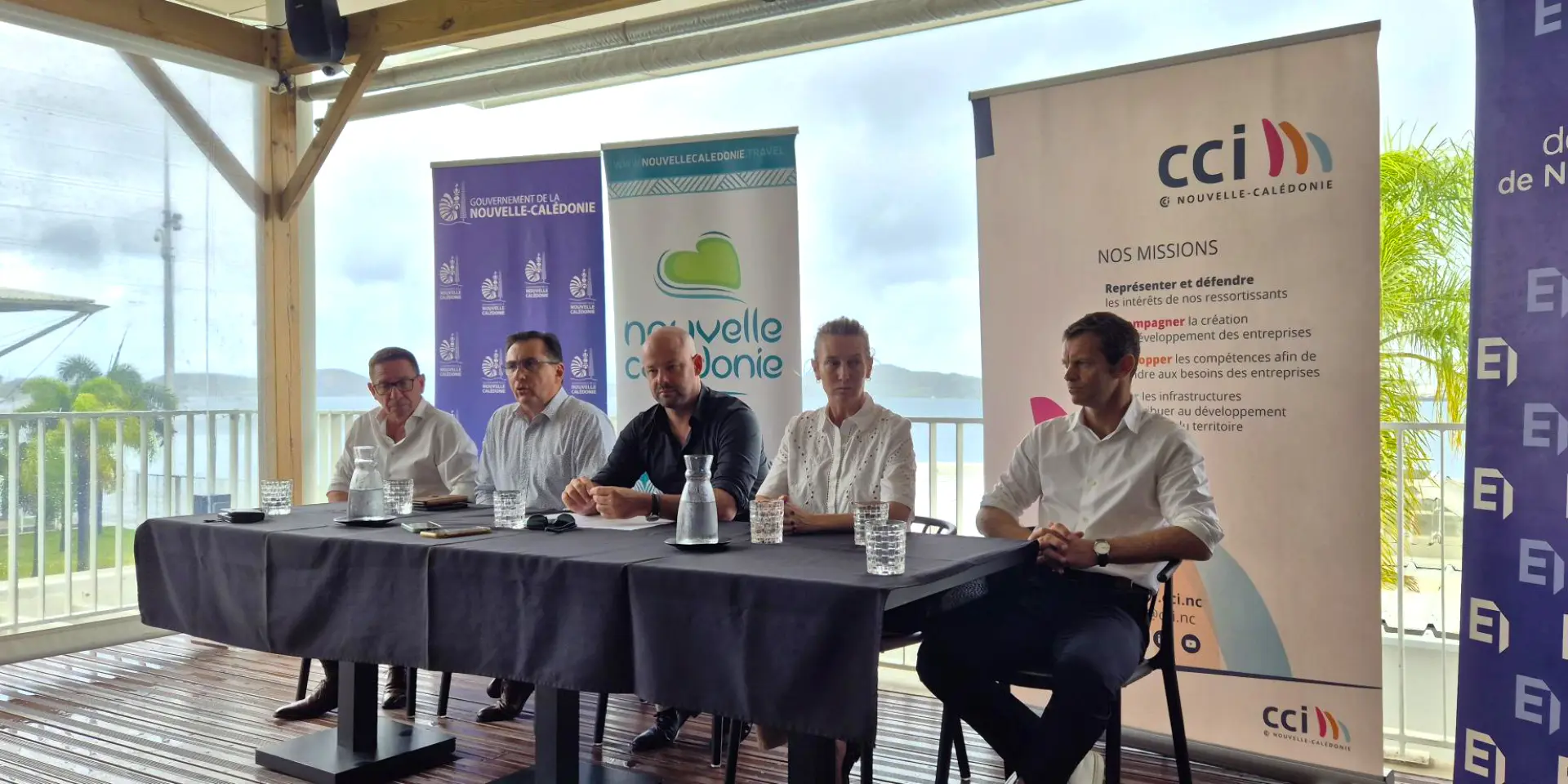
After a crisis in 2024, New Caledonia now has a historic opportunity to reinvent itself, unite its energies and build a genuine tourism industry for the future—serving as a lever for economic diversification. To achieve this, the government plans to significantly strengthen the territory’s international promotion through a coordinated approach involving both public and private stakeholders.
Gygès emphasised the shared determination of tourism stakeholders to relaunch international promotion despite the current context.
“New Caledonia must move forward today despite the difficulties. Moving forward together, with public and private actors, shows that our plan is both ambitious and realistic, enabling the creation of wealth in New Caledonia—something we urgently need at the moment.”
The objective is clear and ambitious: welcoming 250,000 tourists by 2032 (the year of the Brisbane Olympic Games). In its best-performing year since the pandemic, 2023, the destination welcomed over 126,000 tourists, excluding cruise passengers.
Tourism must once again become a driver of sustainable growth, job creation and international visibility for the entire country, while deeply transforming its DNA: moving upmarket, diversifying offerings, and positioning itself in high-value-added markets.
This ambition requires a shared commitment from local authorities, airlines, hoteliers, service providers, banks, chambers of commerce and training institutions around a common vision: showcasing New Caledonia’s assets internationally.
This proactive and ambitious recovery strategy will take shape through:
- a concrete action plan for the first 100 days to immediately kick-start the recovery dynamic;
- a strategic framework extending to 2032, designed to build a sustainable, clear model capable of consistently reaching the 250,000-
- a strong, unifying identity to embody this new momentum.
For Christopher Gygès, “the tourism sector represents a genuine industry of the future,” for which the government intends to strengthen its support. “The government will propose increasing the international promotion budget from 250 to at least 400 million francs. This budget will be reinforced by revenue from part of the cruise tax and an Airbnb tax, which will be introduced shortly. The goal is to reach nearly 700 million francs by the end of 2026 and then gradually increase it to one billion francs.”
Restoring confidence and enhancing the visibility of the New Caledonia destination
The first step in the recovery is to restore confidence and improve New Caledonia’s international visibility, restoring its rightful place on the Pacific map.
The government, working with the provinces, New Caledonia Tourism and private stakeholders, will implement a unified communication and promotion strategy:
- a significant increase in the international promotion budget, targeting Australia, New Zealand and Japan;
- joint campaigns between institutions, airlines, hoteliers and tour operators to ensure coherent and impactful communication;
- attractive “flight + accommodation” offers to stimulate regional demand;
- hosting a major audiovisual production (TV series or national game show) from 2026, offering exceptional media exposure for the territory;
- creation of a New Caledonian excellence label in partnership with the provinces, promoting premium service, impeccable quality, an integrated high-end experience, and a strong commitment to environmental sustainability.
Improving air connectivity
One key to recovery lies in improving access to the destination. Partners therefore commit to:
- implementing proactive pricing policies in priority markets (Australia, New Zealand, Japan);
- encouraging the arrival of new regional and international airlines;
- relaunching charter flights to Japan from 2026, with at least one flight per month;
- developing competitively priced “transport + accommodation” partnerships to make stays more accessible.
“We must draw inspiration from what works elsewhere, such as in Polynesia or Fiji,” explained the government representative.
Development and diversification
Diversifying tourism activity will also involve developing several initiatives:
- positioning New Caledonia as a “MICE & Events” destination (Meetings, Incentives, Conferences and Exhibitions);
- strengthening infrastructure for conferences and events in Nouméa and the provinces;
- developing sports tourism by leveraging the territory’s natural assets to host regional and international competitions (sailing, golf, trail running, kitesurfing, etc.);
- creating an annual calendar to promote major economic, cultural and sporting events across the territory.
Supporting hotel investment and the development of tourism offerings
To welcome more visitors, New Caledonia must strengthen its accommodation capacity and diversify its offerings.
The government therefore proposes implementing a tourism investment strategy based on:
- restarting hotel construction and renovation through targeted financial and tax incentives;
- supporting the diversification of accommodation (eco-lodges, guesthouses, homestays, rural tourism);
- creating tourist free zones, in partnership with the provinces, to attract investors through specific tax and administrative advantages.
Promoting training, skills and employment
The government, in collaboration with training institutions and industry professionals, also plans to roll out a comprehensive skills development plan to promote high-quality service:
- increasing the training budget for new professionals in hospitality, food services, culture and leisure activities;
- adapting training programs to sector needs and international visitor expectations;
- promoting local know-how and cultures, making tourism a vector of identity and pride.
Towards a new tourism brand
To embody this strategy for revitalising New Caledonian tourism internationally, a new tourism brand will be created to replace the current “Pacifique au cœur” (New Caledonia, Pacific heart) brand, adopted in 2010.
A public consultation has been launched involving the general public and tourism professionals to define the new brand identity. They will choose the one proposal that best represents New Caledonia for international promotion.
New offerings in New Caledonia
Coinciding with the announcement of the new recovery plan, the destination welcomes two new hotels in the destination, as well as changes to domestic flight transfers on the mainland. In December, Hotel Wadra Bay opened its doors to the public, and in April this year, a new luxury apartment hotel, Aqualuna, will open on the beachfront of Anse Vata beach in Noumea.
From the 2nd of March, domestic flights operated by Air Calédonie will transfer at La Tontouta International Airport. This change in operations represents a strategic milestone for the development of both domestic and international air transport, offering passengers an enhanced travel experience, with improved connectivity with international flights, and modernised infrastructure serving New Caledonia.